2026 Roadmap: Offline Analysis, Chat, and Progress
A quick Genderfluent development update covering on-device voice analysis, conversational practice, progress tracking, and the related Strivocal app.
Written by: Charlie Murphy
- General
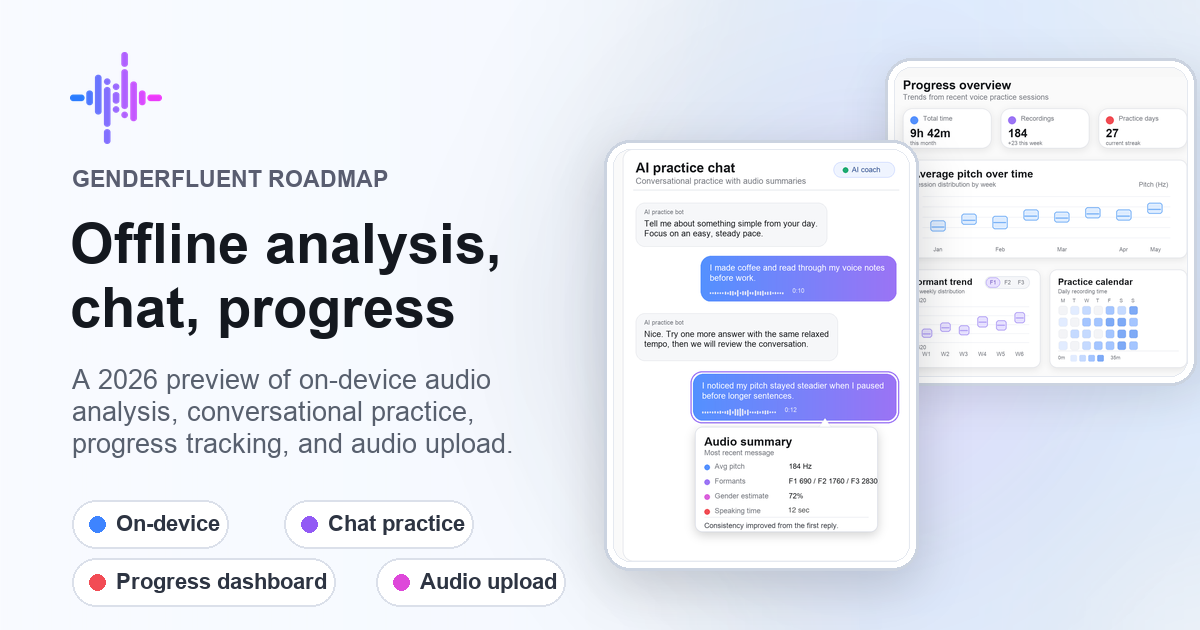
We’ve been working on a few larger updates behind the scenes. We’re improving privacy and reliability with fully on-device audio analysis, exploring a more conversational way to practice, building better long-term progress tracking, and continuing work on a related app called Strivocal.
On-device audio analysis
One of the biggest upcoming improvements is the ability to run all audio analysis on your device. Today, some analysis features depend on a network connection. The update we’re building will make it possible to use Genderfluent without sending audio away from your phone or computer for analysis.
This matters for two main reasons:
- Better access when your connection is unreliable. If you have poor mobile service, slow Wi-Fi, or no internet connection at all, voice practice should still be available.
- More privacy options. Some people are comfortable using cloud-based analysis, while others strongly prefer keeping audio processing local. On-device analysis will give users more control over that choice.
Genderfluent is designed to support regular voice practice, and regular practice is easier when the tool works wherever you are. Being able to analyze pitch, formants, and other voice training metrics locally should make the app feel faster, more dependable, and more private for people who want that option.
We’re also planning to add audio upload support soon, so you can bring in recordings made outside of Genderfluent and review them with the same kinds of analysis tools. That could be useful for checking a clip from another app, reviewing practice audio you already have, or comparing recordings from different settings.
Guided voice exercises
We’re also planning to add more guided exercises to Genderfluent. The goal is to give users more structured practice for learning how to adjust parts of their voice, such as pitch, resonance, and formants.
This is something many people have asked for, and it makes sense. Real-time graphs and practice cards are useful, but they can still leave you figuring out what to do next on your own. Guided exercises would offer more direction: short activities, prompts, or practice flows that help connect the acoustic feedback in Genderfluent to the physical and perceptual changes you’re trying to make.
A more conversational way to practice
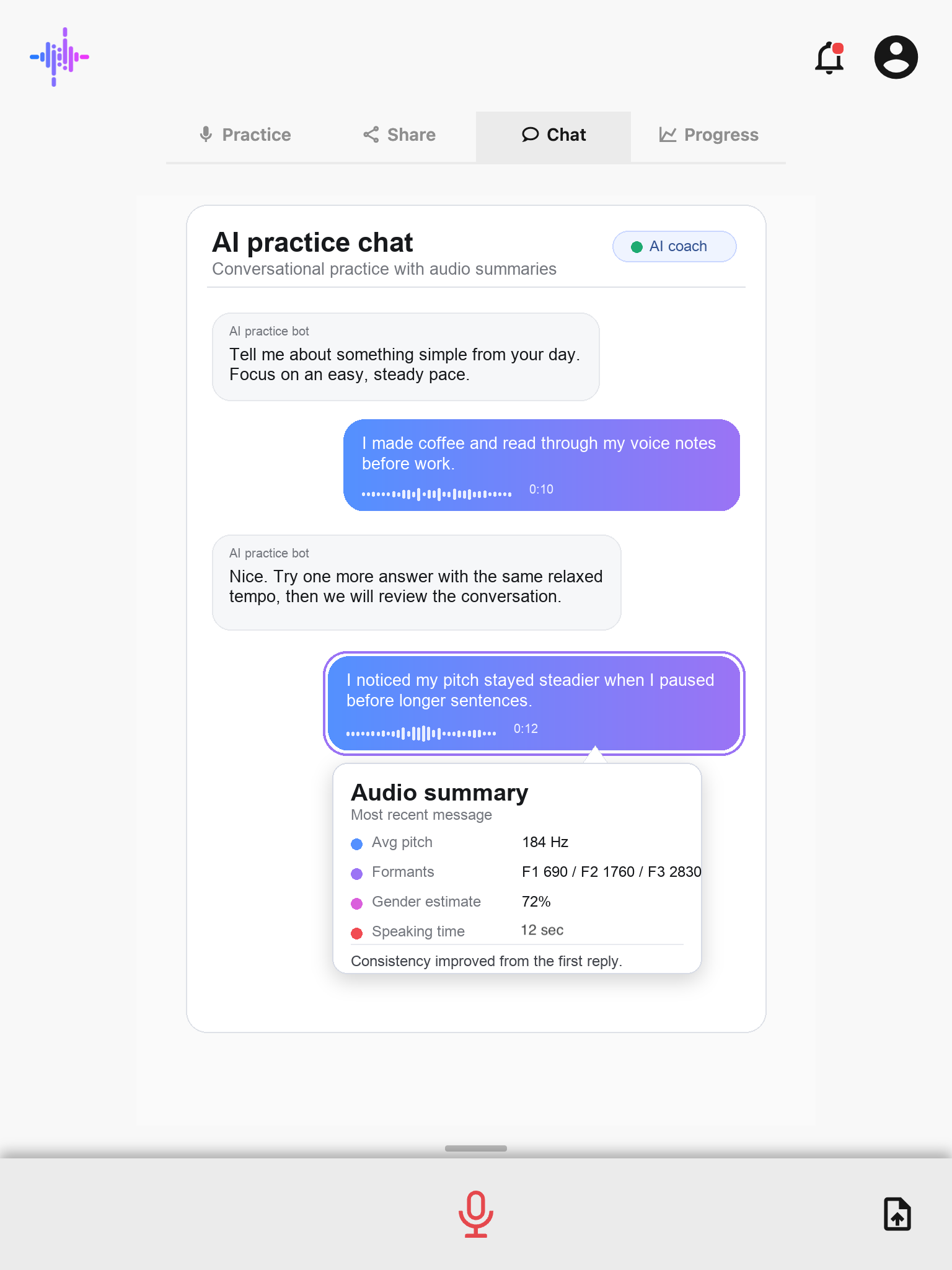
We’re also planning a new chat-like practice experience. Instead of watching graphs while you speak and trying to interpret every metric in real time, this feature would feel more like a text message thread.
The idea is that you could speak naturally in a conversation, either with someone you’re connected with in Genderfluent or with an AI practice bot. You would still get useful feedback, but the experience would be less like staring at a dashboard and more like having a conversation.
Afterward, Genderfluent could summarize the conversation with the voice training metrics that matter most, such as pitch, formants, perceived vocal gender, consistency, and practice time. That way, you can focus on communicating naturally while still getting a useful review of how the conversation went.
This is especially important because voice training does not only happen in isolated exercises. Scales, phrases, and recordings are helpful, but the real goal for many people is feeling more comfortable in everyday conversation. A conversational practice mode could make that bridge easier.
Progress tracking over time
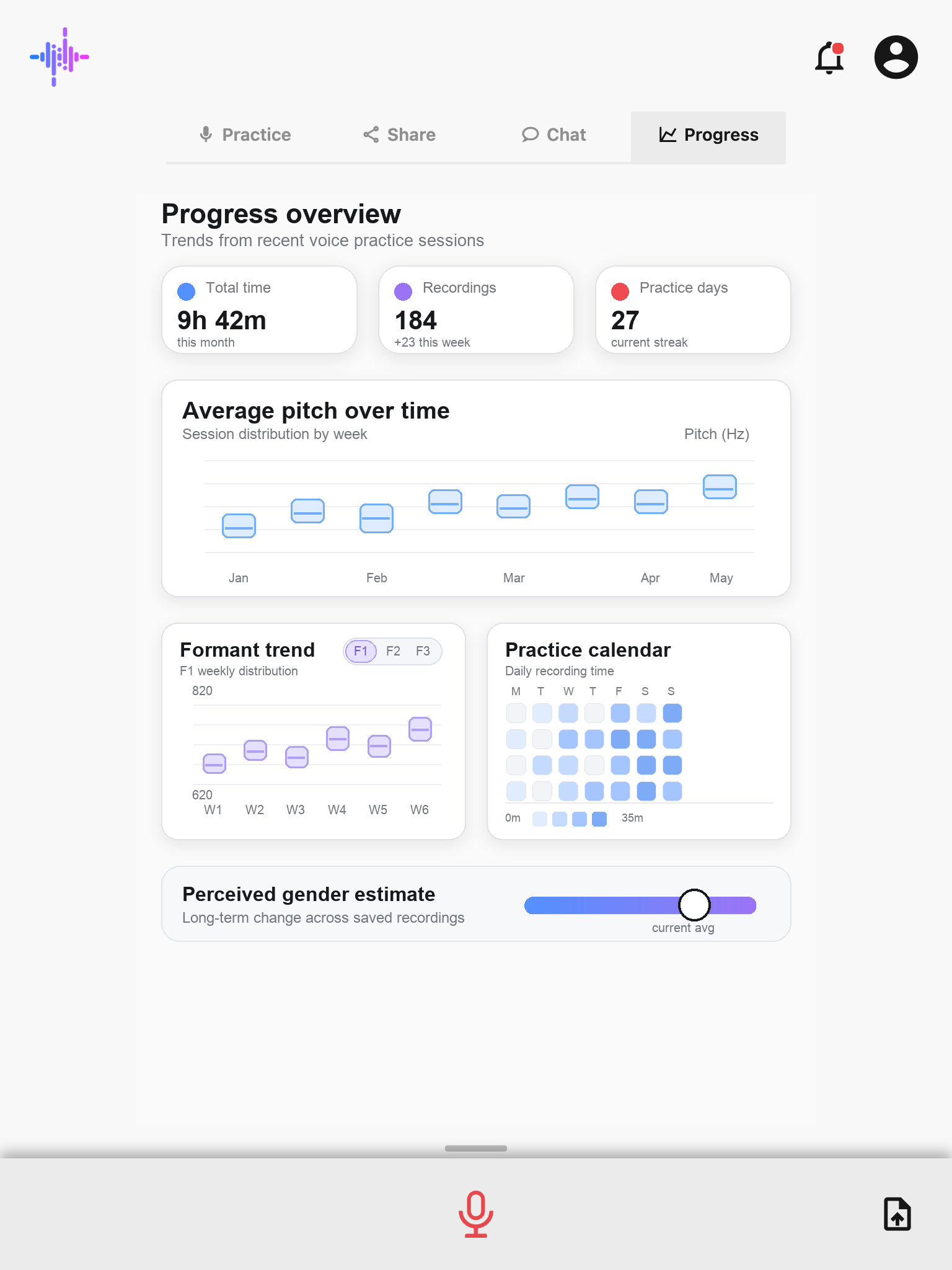
Another major feature we’re working on is a progress dashboard. The goal is to make it easier to see how your voice has changed over days, weeks, and months of practice.
The dashboard is planned to include trends such as:
- Changes in pitch over time
- Changes in formants and resonance-related measurements
- Changes in perceived vocal gender estimates
- How often you practice
- How much time you spend practicing
- How different exercises or recordings compare with each other
Voice training progress can be hard to notice day to day. Sometimes the changes are gradual enough that you only realize how far you’ve come when you compare recordings from different points in time. A progress dashboard should make those patterns easier to see at a glance.
These larger roadmap features are planned for 2026. As always, exact timing can shift as we test, revise, and make sure the app remains stable across web, iOS, and Android.
Strivocal is also in development
We’re also actively developing a sister app called Strivocal. Strivocal shares the same underlying codebase as Genderfluent, but it is intended for people who want a voice training or voice improvement app that is not specifically LGBTQ-focused.
That shared foundation is useful for both apps. Improvements to audio analysis, practice tools, privacy options, reliability, and performance can benefit Genderfluent and Strivocal together. In practical terms, work on one app helps strengthen the other.
Genderfluent will continue to be focused on transgender voice training, with language, features, and community context built around that audience. Strivocal gives us a way to support a broader voice practice audience without diluting what makes Genderfluent specific and affirming.
If you’re looking for a non-LGBTQ-specific voice training app, Strivocal may be worth keeping an eye on as development continues.