Voice Training Glossary: Pitch, Formants, Resonance
Updated on: Tue Jul 07 2026
Voice training comes with a lot of specialized language. You might hear people talk about pitch, resonance, formants, vocal weight, F0, F1, F2, or F3, and it can be hard to know which terms describe the same thing and which ones point to different parts of your voice. This glossary is written for gender-affirming voice practice, including voice feminization, voice masculinization, and nonbinary or gender-expansive voice goals.
Voice analysis is most helpful when it gives you clearer feedback without turning your voice into a score. Apps like Genderfluent can help you connect what you feel, what you hear, and what the acoustic data shows. A voice coach or speech-language pathologist can still offer guidance that an app cannot, especially around vocal health and individualized technique.
Quick Definitions
- Pitch / F0: How high or low a voice sounds, usually measured in hertz.
- Resonance: How the vocal tract shapes sound after it is produced.
- Formants: Measurable frequency regions related to resonance, vowel shape, and vocal tract configuration.
- Vocal weight: How heavy, light, thick, or thin a voice sounds.
- Volume: How loud or soft your voice is.
- Intonation: How pitch moves across a phrase or sentence.
- Articulation: How clearly and physically you shape speech sounds.
- Perceived gender feedback: An acoustic estimate of how a voice may be gendered by listeners, not a statement about your identity.
On This Page
- What is pitch in voice training?
- What is resonance in voice training?
- What are formants?
- Vocal Weight
- Volume
- Intonation
- Articulation
- Perceived Gender Feedback
- Spectrogram
- How Genderfluent Uses These Terms
- References
What is pitch in voice training?
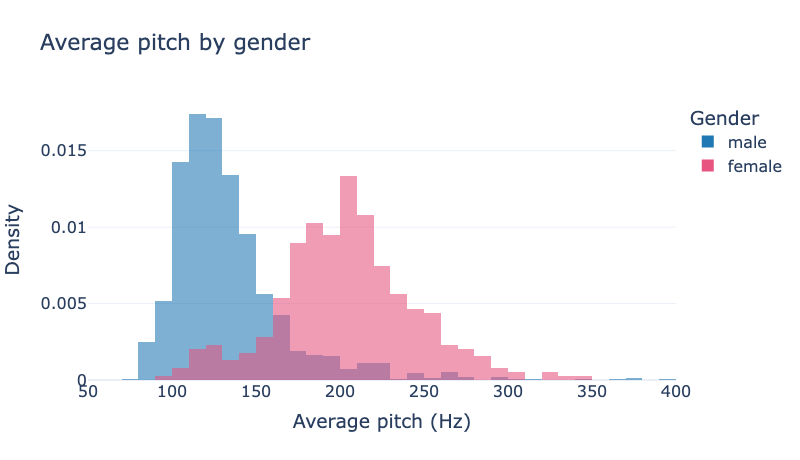
Pitch is how high or low a voice sounds. In voice analysis, pitch is usually measured in hertz (Hz). A higher number means the vocal folds are vibrating more times per second. A lower number means they are vibrating fewer times per second. In acoustic terms, this measured pitch is usually called fundamental frequency, or F0 [1].
Pitch matters in gender-affirming voice training, but it is not the whole voice. Two people can speak at the same pitch and still sound very different because resonance, formants, volume, articulation, intonation, vocal weight, and speech style all contribute to how a voice is perceived.
For many people practicing voice feminization, pitch may be one useful area to explore. For many people practicing voice masculinization, pitch may also matter. But there is a lot of overlap across genders, and a voice can feel aligned even when it does not sit inside a narrow pitch range.
What is resonance in voice training?
Resonance describes how sound is shaped by the spaces in your vocal tract, including the throat, mouth, tongue position, jaw position, and lips. In voice training, people often use resonance as a practical listening term for the quality, brightness, darkness, size, or placement of the sound.
If pitch is related to how quickly the vocal folds vibrate, resonance is related to how the sound is filtered after it is created. The source-filter model describes this in two broad pieces: the vocal folds provide a sound source, and the vocal tract filters that sound through its resonances [2]. This is why changing your tongue, lips, larynx position, or mouth shape can change the character of your voice even when your pitch stays the same [1, 2].
In gender-affirming voice practice, resonance is often one of the biggest reasons two voices with similar pitch can be perceived differently. Some learners describe brighter, smaller, or more forward resonance as more feminine. Others describe darker, larger, or more open resonance as more masculine. Those labels are practice shortcuts, not rules about how any person has to sound.
Resonance and formants are closely related, and in some contexts people use the words almost interchangeably. A helpful distinction is that resonance is the broader physical and perceptual idea. Formants are measurable acoustic frequency regions that show up in the speech signal because of those resonances [2, 3, 4].
What are formants?
Formants are resonant frequencies of the vocal tract, or the resonance-related peaks that can be measured in a speech signal. They are one way to measure part of what voice teachers and coaches often describe as resonance [2, 3, 4].
When you speak, your vocal tract emphasizes certain frequency areas. These emphasized areas help shape vowels, voice quality, and perceived vocal size [1, 2, 4].
The first few formants are especially important in speech analysis:
| Term | Meaning |
|---|---|
| F1 | The first formant |
| F2 | The second formant |
| F3 | The third formant |
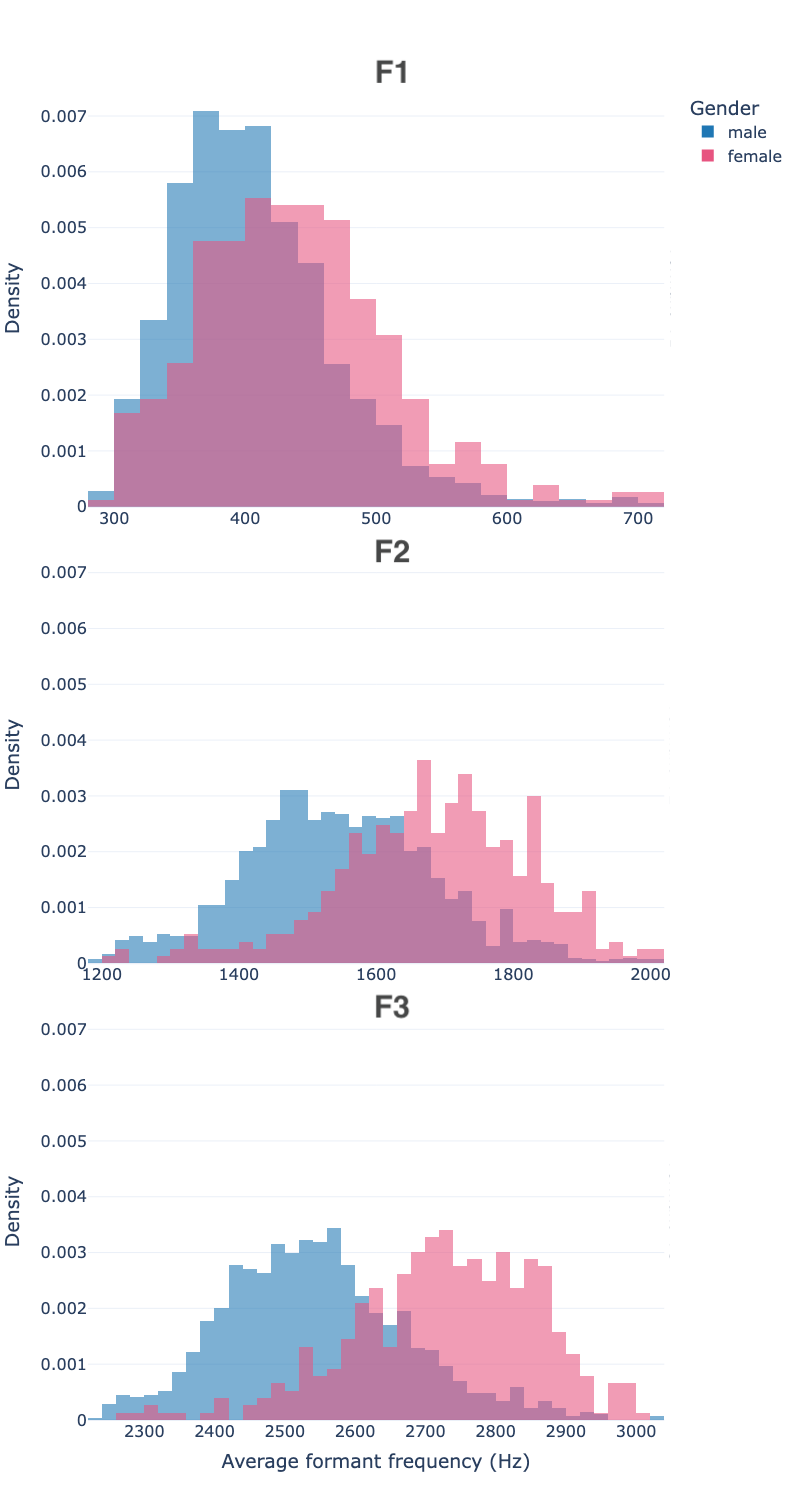
If you want a deeper explanation, read What are vocal formants?, which explains how formants are measured and how they relate to perceived gender. The chart below shows how F1, F2, and F3 values can differ across broad speaker groups, while still overlapping from person to person.
F1
F1 is the first formant. It is strongly affected by vowel shape, jaw height, tongue height, and the overall shape of the vocal tract. Open vowels often have a higher F1 than close vowels. In practical voice training, F1 can help show how your mouth and vocal tract shape are changing while you speak.
F2
F2 is the second formant. It is especially affected by tongue position and lip shape. Front vowels tend to have a higher F2, while back or rounded vowels often have a lower F2. F2 can be useful when looking at how different vowels and articulation habits affect the sound of your voice.
F3
F3 is the third formant. It is often more subtle than F1 and F2, but it can still contribute to voice quality and how vowels are perceived. For most beginners, F1 and F2 are easier places to start. F3 becomes more useful when you want a more detailed acoustic picture.
Vocal Weight
Vocal weight describes how heavy, light, thick, or thin a voice sounds. It is a practical voice-training term rather than a single standard acoustic measurement, and it overlaps with broader ideas like voice quality, phonation, and vocal fold behavior [5].
It is not the same thing as volume. A voice can be quiet and still sound heavy, or loud and still sound light. People often notice vocal weight when comparing a soft, light voice to a fuller, denser voice at a similar pitch.
For gender-affirming practice, vocal weight can be a useful listening target because it changes the overall impression of the voice. Some people work toward a lighter quality, some work toward a fuller quality, and some simply want more flexibility.
Volume
Volume describes how loud or soft your voice is. Volume is usually measured as sound intensity or sound pressure level, but in practice it is about how much loudness you are producing and how loud you seem to a listener.
Volume matters because voice training has to transfer into real life. A voice that works in quiet solo practice may feel different in a conversation, on a phone call, in a meeting, or in a noisy room. It can also change how pitch, resonance, and vocal weight feel.
Intonation
Intonation is the movement of pitch across a phrase or sentence. For example, your pitch might rise at the end of a question, fall at the end of a statement, or move more expressively when you are excited. Two people can have the same average pitch but use very different intonation patterns.
Intonation affects how natural, expressive, confident, or conversational a voice sounds. In gender-affirming training, it can be helpful to practice intonation with phrases you actually use, not only isolated sounds.
Genderfluent does not currently measure intonation directly, so it is best practiced by listening back to recordings, noticing pitch movement over phrases, and getting feedback from people you trust.
Articulation
Articulation is how clearly and physically you shape speech sounds [1]. Your tongue, lips, jaw, teeth, and soft palate all contribute to articulation. Small changes in articulation can affect vowels, consonants, rhythm, and the overall character of your speech.
In voice training, articulation gives you a concrete place to practice. Words, phrases, and sentences help you repeat the same sounds while adjusting pitch, resonance, volume, or intonation.
Genderfluent does not currently measure articulation directly. You can still use recordings and practice cards to work on articulation, but the app will not score pronunciation, clarity, or consonant/vowel shaping.
Perceived Gender Feedback
Perceived gender describes how a listener may interpret a voice in terms of gender presentation. This is not the same thing as a person’s identity. It is also not determined by a single acoustic feature. Pitch, formants, resonance, vocal weight, articulation, intonation, volume, language, context, and listener expectations can all influence perception [6].
Because perceived gender is complex, it is best to use app feedback as one source of information rather than a final judgment. Your goals, comfort, safety, and real-world feedback matter too.
For an early explanation of how Genderfluent estimates perceived gender from voice recordings, read How AI empowers transgender voice training.
Spectrogram
A spectrogram is a visual display of sound over time [1, 7]. It usually shows time from left to right, frequency from bottom to top, and intensity through color or brightness. Spectrograms can help show pitch movement, formants, noise, and other acoustic patterns [1, 7].
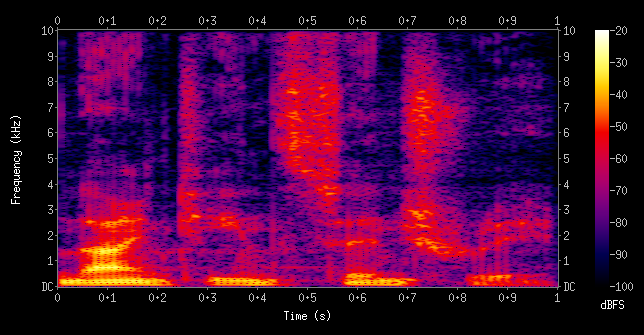

You do not need to become an audio engineer to benefit from voice analysis, but visual feedback can make invisible voice patterns easier to notice. Genderfluent does not currently provide a spectrogram view.
How Genderfluent Uses These Terms
Genderfluent gives feedback on pitch, formants, volume, and perceived gender. It does not currently measure intonation or articulation directly, and it does not provide a spectrogram. It also lets you save clips, review recordings, practice with cards, and share recordings with people who can support your progress.
The goal is not to reduce your voice to numbers. The goal is to give you clearer feedback while you practice, so you can connect what you feel, what you hear, and what the acoustic data shows.
Apps are most useful when they supplement the rest of your voice training. A professional voice coach or speech-language pathologist can provide guidance that an app cannot, especially around vocal health, technique, and individualized support.
Want to try Genderfluent?
Genderfluent is available on iOS, Android, and the web. You can try Genderfluent’s voice training app and start with short recordings, practice cards, and real-time feedback.
References
- Ladefoged, P., & Johnson, K. (2015). A course in phonetics (7th ed.). Cengage.
- Fant, G. (1960). Acoustic theory of speech production. Mouton.
- Titze et al. Toward a consensus on symbolic notation of harmonics, resonances, and formants in vocalization
- Peterson, G. E., & Barney, H. L. Control methods used in a study of the vowels
- Titze, I. R. Nonlinear source-filter coupling in phonation: Theory
- Perceptual weighting of acoustic cues for accommodating gender-related talker differences
- Wikipedia: Spectrogram